


How an independent luxury hotel optimises its pricing strategy with an RMS
[Vidéo] Les Lodges Sainte-Victoire move from fixed pricing to a dynamic pricing strategy with Revbell,...
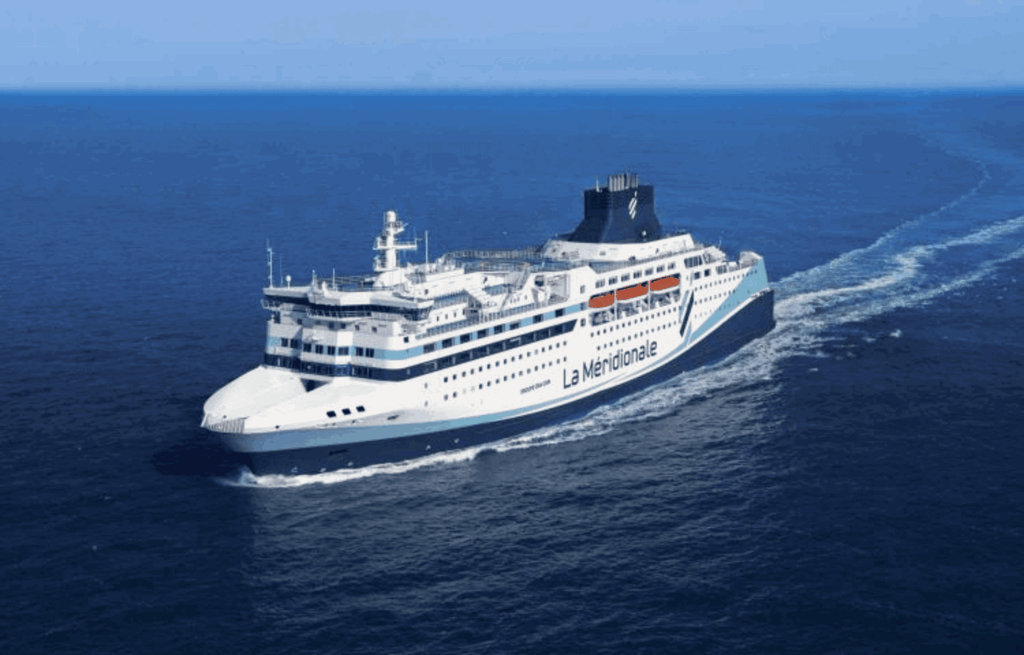
See moreLa Méridionale is transforming its Revenue Management with Revbell: less time spent on reporting, more responsive decision-making and pricing management now driven by data.

+250 000
passengers transported per year
1931
year La Méridionale was founded
In brief: Alexis Dewavrin, Director of Yield Management & Offer Management at La Méridionale (CMA CGM Group, 250,000 passengers/year between mainland France, Corsica and Morocco), shares his experience of the transformation brought about by the Revbell RMS: less time spent extracting data, greater responsiveness, data-driven decisions and a real competitive advantage in a sector where few ferry operators have a dedicated RMS.
Could you introduce yourself and your company?
I’m Alexis Dewavrin, I’m 37 years old and I’m Director of Yield Management & Offer Management at La Méridionale. I have around twelve years of experience in Revenue Management.
Could you tell us about La Méridionale and the specificities of Revenue Management in the maritime industry?
La Méridionale is a long-established maritime transport company, founded in 1931, which is now part of the CMA CGM Group. It transports more than 250,000 passengers a year between mainland France and Corsica, as well as Morocco.
It is a particular sector when it comes to Revenue Management. Unlike the hotel industry, where capacity constraints mainly concern rooms, the maritime industry combines several constraints simultaneously: the number of cabins, the number of vehicles in the garages and the number of passengers.
Before Revbell, a considerable amount of time was spent extracting data and integrating it into Excel spreadsheets. A large part of the work focused on building dashboards, at the expense of decision-making. We struggled to react in real time and were often out of sync with demand trends.
Initially, we were insourcing clients. The initial support enabled us to develop our Revenue Management methods and build our expertise, thanks to experts embedded within our teams. We then chose the RMS solution primarily to gain greater responsiveness.
What convinced you to choose Revbell over the other solutions on the market?
The forecast modelling capabilities were a key deciding factor. The AI capabilities and the support provided, which help drive decision-making, ultimately convinced us.
Concretely, what does a typical day with the Revbell RMS look like?
Today, we are a team of three people using the RMS on a daily basis. We start by reviewing the alerts, then we review each crossing. We also have dedicated views, particularly the management and optimisation view, as well as more macro-level reporting views, which allow us to monitor the revenue forecast and its evolution.
What has changed in your organisation?
In the past, our decisions were made less frequently and relied more heavily on impressions. Today, data is an integral part of our decision-making process. Our management is much more objective and based on historical data, which also enables us to explain the precise reasons behind our decisions to top management.
What do you think about integrating artificial intelligence into Revenue Management roles?
When it comes to AI, I see opportunities on two fronts: automating a number of time-consuming tasks so we can focus more on strategy and broadening our areas of analysis by incorporating more context, for example a market view of competitors’ prices and capacity.
A message for ferry operators who have not yet taken the step towards adopting an RMS?
In the ferry industry, adopting a tool like Revbell immediately provides a competitive advantage: few operators have an RMS that is as dedicated and tailored to their specific needs. For us, the return on investment is significant and delivers value over the long term. It frees up time for higher-value activities.
Fermé
Yes, with specific constraints: unlike the hotel industry, where capacity constraints mainly concern rooms, the maritime industry combines three simultaneous constraints: the number of cabins, the number of vehicles in the garages and the number of passengers. This complexity makes a dedicated RMS even more valuable.
Fermé
La Méridionale identifies three main benefits: responsiveness (real-time decisions rather than decisions made too late), objectivity (decisions based on historical data rather than impressions) and time savings (less manual data extraction, more focus on strategy). For a team of three people, the RMS has become a daily management tool.
Fermé
Because few ferry operators currently have a dedicated RMS adapted to their specific constraints. Being among the first to structure Revenue Management with a high-performance tool creates a lasting gap with the competition, with a return on investment that delivers value over the long term.
Fermé
By making pricing decisions explainable and traceable. Before Revbell, decisions at La Méridionale relied more heavily on impressions. Today, every decision can be supported by historical data and structured forecasts, making dialogue with senior management considerably easier.
[Vidéo] Les Lodges Sainte-Victoire move from fixed pricing to a dynamic pricing strategy with Revbell,...
See more

[Interview] At Domaine de la Forêt d’Orient, David Wiss explains how adopting the Revbell RMS...
See more

[Interview] After 6 months with the Revbell RMS, Laurianne Devaux, assistant director of the Hôtel...
See more