

Is Revenue Management reserved for large hotel chains?
Is Revenue Management reserved for large hotel chains? Discover why RMS are now accessible to...
See more
Discover how Total Revenue Management goes beyond multi-profit reporting to become a true strategy for steering and optimizing global revenue.
Total Revenue Management” is on everyone’s lips. It’s mentioned in conferences, executive committees, hotel group strategic plans and even in the LinkedIn profiles of Revenue Managers. But in reality, it is often reduced to a label attached to multi-profit reporting: a consolidated view of Spa, F&B, Rooms and sometimes MICE performance.
This is already progress and indeed valuable for finance and leadership teams. But it is still far, very far, from what truly defines Total Revenue Management.
Many teams equate Total RM with the ability to “see more broadly”: aggregating revenues, tracking indicators, comparing margins. Yet simply observing performance does not create a strategy. Reporting is not an optimisation method, and as long as revenue management remains confined to this observer role, it cannot fully act as the architect and driver of revenue.
This confusion locks RM into a passive position. It receives pricing directions for ancillary products from Operations, often in a “top-down” (or rather horizontal) logic where decisions originate from the operational teams. Yet this “cost+” approach rarely stems from a deep understanding of the constraints specific to each perishable product.
Total Revenue Management is, first and foremost, about applying constraint-based optimization methods to all perishable activities within an establishment.
The principle is simple, but implementation is complex:
Identify the real constraint, on the appropriate inventory (capacity, time, space, etc.)
Quantify its intensity
Consider Pricing levers (rate types, flexibility, advance purchase, packages)
And yield levers (steering sales restrictions & dynamic pricing)
Take the example of a Spa / Wellness facility.
Applying RM to this activity is not just about knowing the Spa’s performance. Reporting is only the tail end of the value chain.
It’s about understanding the constraint for each time slot, measuring its intensity and defining strategies capable of guiding guests toward less congested periods.
By easing pressure on the busiest slots and adjusting rates, conditions, or package composition, you can optimize revenue opportunities.
In other words: moving from occupancy reporting to a dynamic optimization approach.
At Revbell, we have studied numerous sectors eligible for Revenue Management, beyond the traditional domains of hospitality and transportation.
And we discovered that each sector has its own representation of the constraint and therefore its own method of analysis, depending on the booking type:
Dated or undated time slots
Timed or untimed bookings
Each activity must be analyzed according to its own logic, but steered toward a common objective: the total optimization of overall revenue.
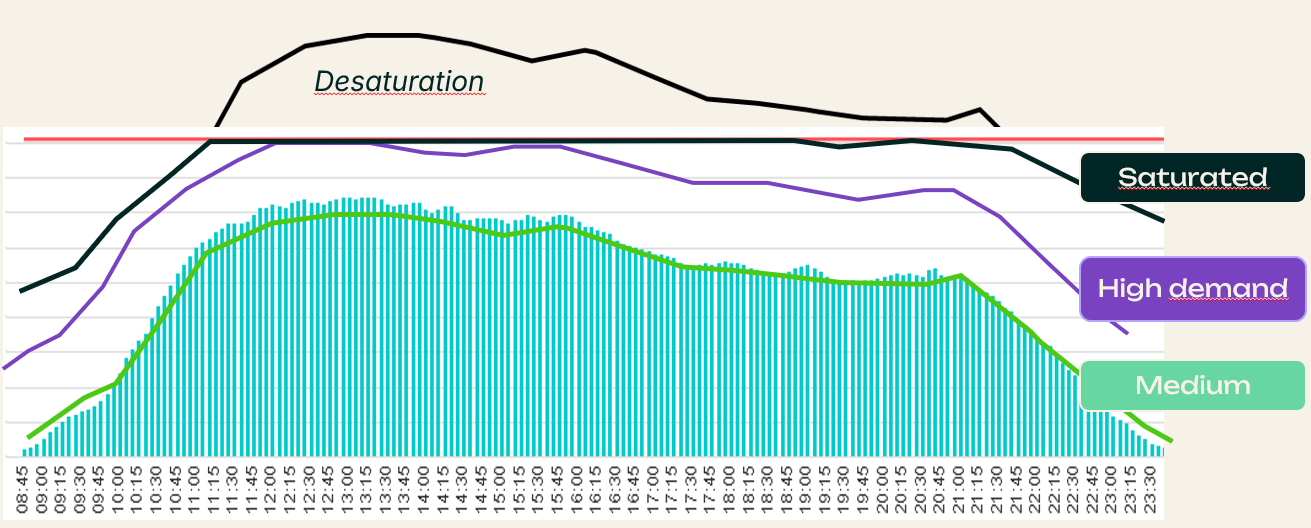
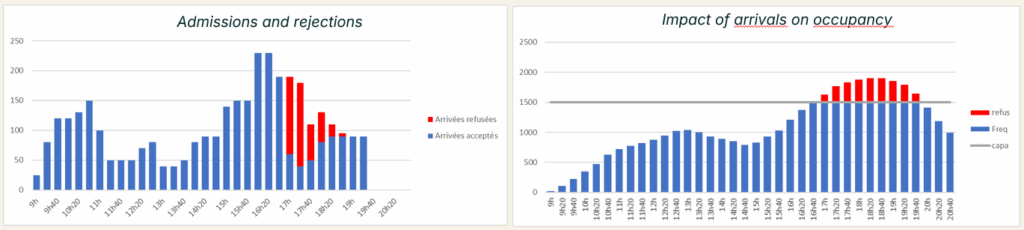
Reducing Total RM to mere reporting is a lack of ambition. It would be like summarizing hotel Revenue Management as nothing more than a snapshot of occupancy or RevPAR.
Total Revenue Management is quite the opposite: a strategic and steering-driven approach.
We see Total Revenue Management as the ability to apply RM principles (demand & constraint, strategy & steering) across all profit centers, with shared principles but sector-specific adaptations.
And perhaps that is the true promise of Total RM: moving companies from performance tracking to active management, from observation to decision-making and from reporting to strategy.
Keywords: total revenue management, revenue management strategy, revenue optimization, revenue steering, yield management, hotel pricing, multi-profit performance, revenue management consulting
Is Revenue Management reserved for large hotel chains? Discover why RMS are now accessible to...
See more
The end of OTA rate parity offers unprecedented freedom. The key is knowing how to...
See more
How the shift from GDS to NDC and “continuous pricing” could transform airline ticket prices:...
See more